Comprehensive Laboratory Profile
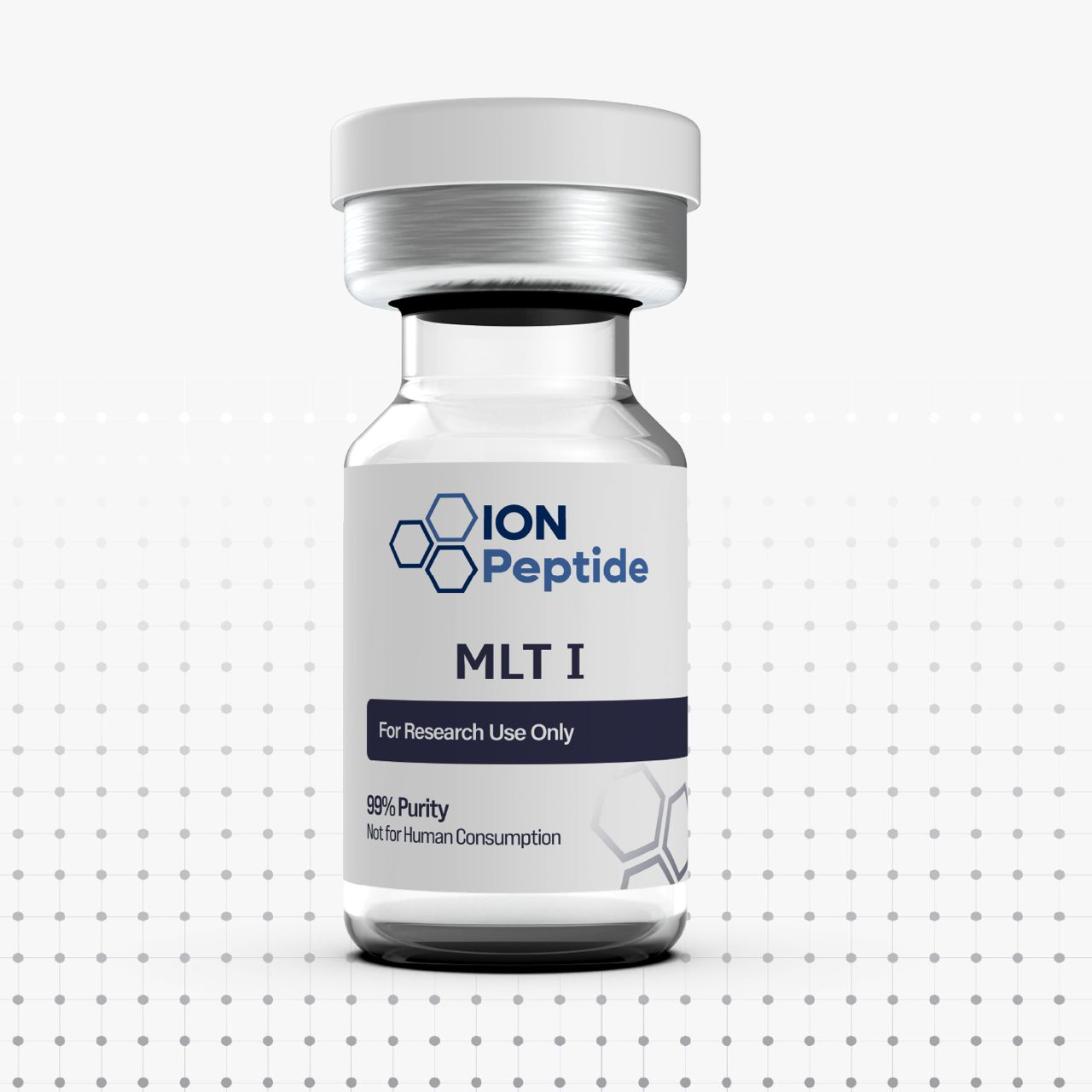
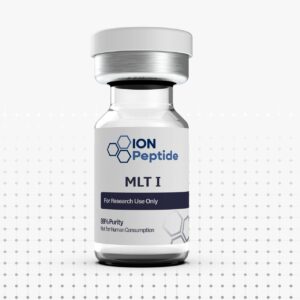
The acquisition of targeted melanocortin receptor agonists provides institutional laboratories with the advanced capability to observe cellular pigmentation and photoprotective mechanisms in real-time. By integrating the MLT I 10mg peptide into institutional protocols, researchers gain access to a highly purified formulation engineered to simulate the aggressive stimulation of the melanogenesis pathway.
Synthesized within our USA-based network to the most rigorous industry standards, this specialized complex delivers absolute analytical precision. Utilizing the MLT I 10mg formulation ensures your laboratory acquires reproducible data, free from the rapid enzymatic degradation typically associated with native alpha-melanocyte-stimulating hormone ($\alpha$-MSH).
Biochemical Profile: MC1R Agonist
The MLT I formulation (Afamelanotide) is a synthetically engineered tridecapeptide. It is a structural analog of endogenous $\alpha$-MSH, featuring two critical amino acid substitutions: Norleucine (Nle) at position 4 and D-Phenylalanine (D-Phe) at position 7.
These precise modifications render the peptide highly resistant to proteolytic enzymes, exponentially increasing its half-life in a laboratory setting. By introducing the MLT I 10mg matrix into an in-vitro environment, researchers can evaluate the targeted, sustained activation of the melanocortin 1 receptor (MC1R) with profound binding affinity.
Mechanism of Action in Cellular Assays
When introduced to cellular monolayers or isolated melanocyte cultures, the MLT I 10mg compound functions as a synchronized melanogenic trigger. It actively binds to the MC1R on the surface of melanocytes, initiating an intracellular cascade that significantly elevates levels of cyclic adenosine monophosphate (cAMP).
This cAMP up-regulation subsequently stimulates the transcription of tyrosinase, the rate-limiting enzyme in melanin production. By deploying this formulation, laboratories can document the aggressive stimulation of eumelanin synthesis. This allows researchers to establish highly stable micro-environments where the cellular defense response to simulated ultraviolet (UV) radiation can be monitored with total scientific clarity.
Primary In-Vitro Research Applications
The exceptional purity and targeted structural design of this peptide make it a cornerstone for advanced dermatological and metabolic R&D:
-
Melanogenesis Assays: Mapping the kinetic response and melanin synthesis rates of melanocyte cultures exposed to stable $\alpha$-MSH analogs.
-
MC1R Affinity Modeling: Evaluating the precise receptor binding and subsequent intracellular cAMP elevation.
-
Photoprotection Studies: Utilizing the MLT I 10mg complex to monitor cellular recovery and oxidative stress mitigation following simulated UV exposure.
-
Enzymatic Resistance R&D: Using this specific sequence to establish standardized laboratory models for comparative efficacy testing against unmodified $\alpha$-MSH.
Absolute Purity and Quality Assurance
At Ion Peptides, we recognize that anomalous data caused by degraded or structurally compromised substrates critically jeopardizes institutional research. Every single batch of our MLT I 10mg peptide is subjected to uncompromising third-party analytical testing before being approved for acquisition.
We utilize High-Performance Liquid Chromatography (HPLC) to verify a purity threshold of >99.0%. Furthermore, rigorous Mass Spectrometry (MS) confirms the precise structural sequence and integrity of the complex. By securing your supply through our strict USA synthesis network and utilizing our secure crypto payment gateway, you guarantee your facility receives elite, uncompromised materials.
Lyophilization, Storage, and Reconstitution Protocols
To ensure maximum molecular stability during secure domestic transit, the MLT I 10mg vial is supplied as a lyophilized (freeze-dried) solid powder.
-
Storage: Keep vials in a climate-controlled, dark environment, ideally at or below -20°C. Protected from light and moisture, the unmixed powder remains stable for up to 36 months.
-
Reconstitution: Utilize sterile bacteriostatic water.
-
Allow the vial to reach ambient room temperature to prevent condensation.
-
Introduce the diluent slowly, directing the fluid flow down the inner wall of the glass to prevent sheer stress.
-
Do not agitate or vortex the vial. Allow the MLT I 10mg powder to dissolve naturally into a clear solution via gentle swirling.
-
Once reconstituted, refrigerate immediately at 2°C to 8°C and utilize within standard laboratory protocol timelines.
-

Reviews
There are no reviews yet.