Comprehensive Laboratory Profile
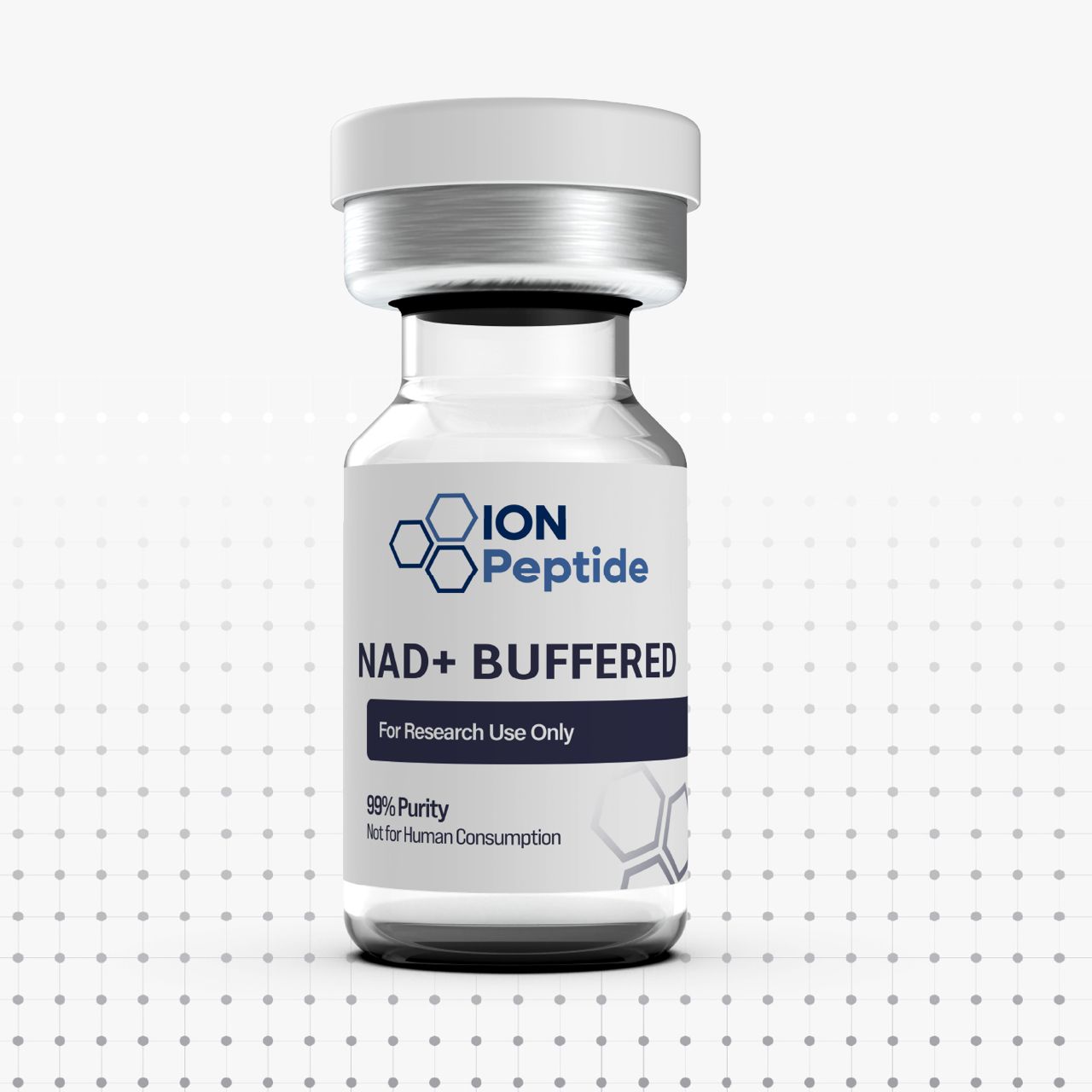
The acquisition of highly stable metabolic coenzymes provides institutional laboratories with the advanced capability to observe cellular energy cycles, DNA repair, and senescence in real-time. By integrating the NAD+ Buffered 500mg complex into institutional protocols, researchers gain access to a highly purified formulation engineered specifically to overcome the rapid hydrolytic degradation that plagues standard, unbuffered NAD+ preparations.
Synthesized within the USA to the most rigorous industry standards, this specialized complex delivers absolute analytical precision. Utilizing the NAD+ Buffered 500mg formulation ensures your laboratory acquires reproducible data, allowing for sustained in-vitro studies without the performance variability of rapidly degrading metabolic substrates.
Biochemical Profile: The Buffered Advantage
Nicotinamide Adenine Dinucleotide (NAD+) is a central dinucleotide found in all living cells, serving as an obligatory electron carrier in intracellular redox reactions. However, in an aqueous laboratory environment, the native molecule is highly sensitive to pH fluctuations, often degrading rapidly before comprehensive assays can be completed.
By introducing a proprietary biological buffer into the lyophilization process, the NAD+ Buffered 500mg matrix maintains an optimal, neutral pH upon reconstitution. This highly specific stabilization profile is critical for longitudinal studies focusing on the upregulation of energy expenditure and the prevention of cellular metabolic decline.
Mechanism of Action in Cellular Assays
When introduced to cellular monolayers or isolated mitochondrial cultures, the NAD+ Buffered 500mg compound functions as a synchronized metabolic catalyst. As a primary electron acceptor in glycolysis, the TCA cycle, and the electron transport chain, it aggressively upregulates the production of cellular ATP.
Beyond energy metabolism, this stabilized formulation acts as the essential substrate for key regulatory enzymes, most notably the Sirtuins (SIRT1-7) and Poly (ADP-ribose) polymerases (PARPs). By deploying this formulation, laboratories can document the aggressive stimulation of DNA repair pathways and cellular longevity mechanisms. This allows researchers to establish highly stable micro-environments where the rapid mitigation of oxidative stress and metabolic senescence can be monitored with total scientific clarity.
Primary In-Vitro Research Applications
The exceptional purity and pH-stabilized design of this coenzyme make it a cornerstone for advanced metabolic and longevity R&D:
-
ATP Synthesis Assays: Mapping the kinetic response and activation rates of mitochondrial energy production in exposed cellular models.
-
Sirtuin Activation Modeling: Evaluating the precise rates of SIRT-dependent gene expression and cellular epigenetic regulation.
-
DNA Repair & PARP Studies: Utilizing the NAD+ Buffered 500mg complex to monitor cellular recovery following induced genotoxic stress.
-
Cellular Senescence R&D: Using this specific buffered sequence to establish standardized laboratory models for comparative efficacy testing against unbuffered NAD+ analogs.
Absolute Purity and Quality Assurance
At Ion Peptides, we recognize that anomalous data caused by degraded or structurally compromised substrates critically jeopardizes institutional research funding. Every single batch of our NAD+ Buffered 500mg coenzyme is subjected to uncompromising third-party analytical testing before being approved for acquisition.
We utilize High-Performance Liquid Chromatography (HPLC) to verify a purity threshold of >99.0%. Furthermore, rigorous Mass Spectrometry (MS) confirms the precise structural sequence and integrity of the complex. By securing your supply through our secure USA synthesis network and encrypted crypto gateways, you guarantee your facility receives elite, uncompromised materials.
Lyophilization, Storage, and Reconstitution Protocols
To ensure maximum molecular stability during secure domestic transit, the NAD+ Buffered 500mg vial is supplied as a lyophilized (freeze-dried) solid powder.
-
Storage: Keep vials in a climate-controlled, dark environment, ideally at or below -20°C. Protected from light and moisture, the unmixed powder remains stable for up to 36 months.
-
Reconstitution: Utilize sterile bacteriostatic water. Allow the vial to reach ambient room temperature to prevent condensation. Introduce the diluent slowly, directing the fluid flow down the inner wall of the glass to prevent sheer stress. Due to the biological buffer, the powder will dissolve efficiently into a clear, pH-stable solution via gentle swirling. Once reconstituted, refrigerate immediately at 2°C to 8°C and utilize within standard laboratory protocol timelines.


Reviews
There are no reviews yet.