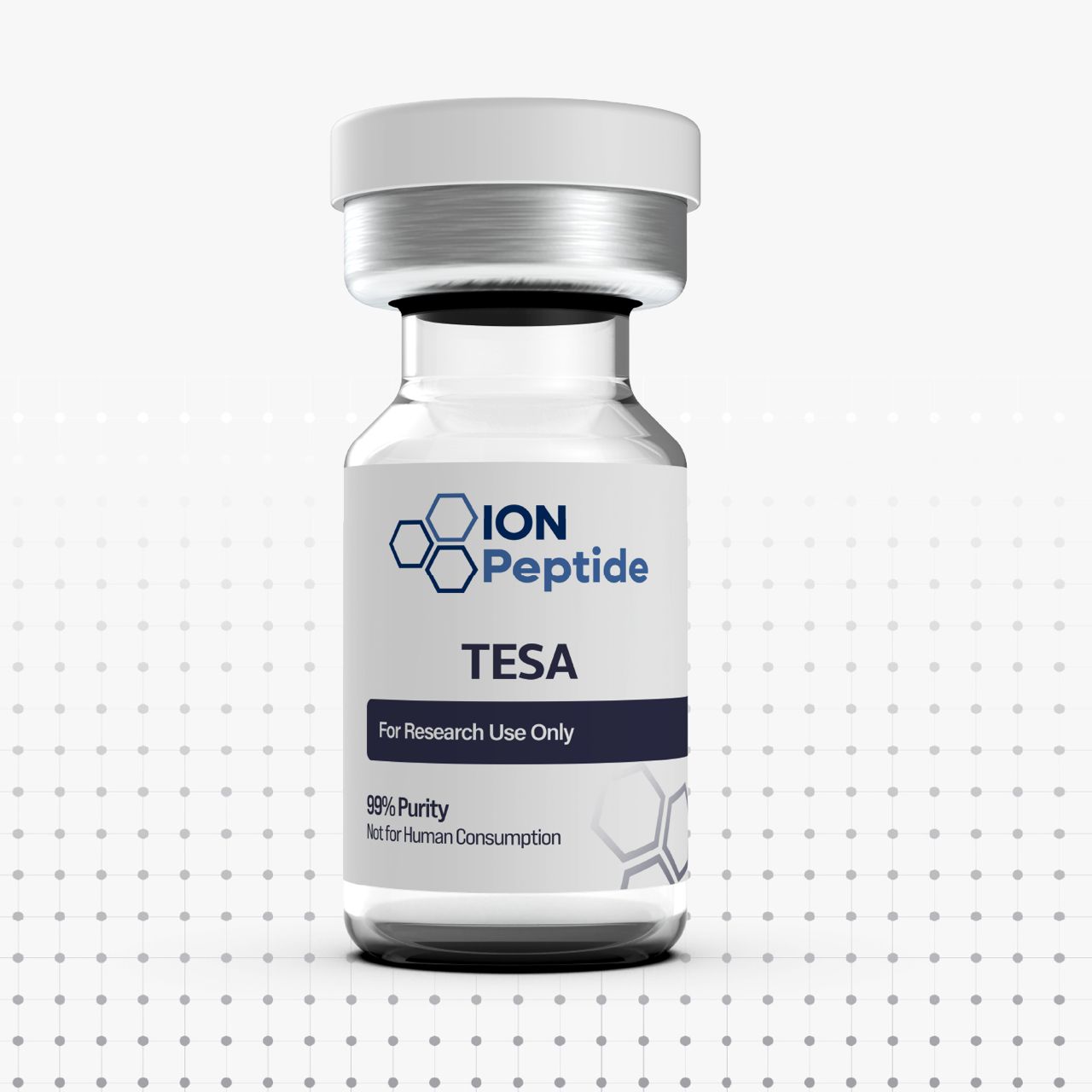
Comprehensive Laboratory Profile
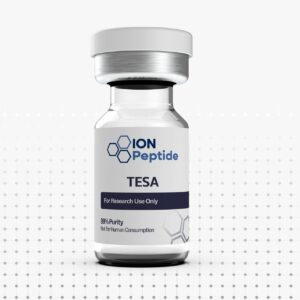
The acquisition of highly stabilized receptor agonists provides institutional laboratories with the advanced capability to observe complex neuro-endocrine signaling and localized cellular activation over extended assay durations. By integrating the Tesa 10mg peptide into institutional protocols, researchers gain access to a highly purified formulation engineered to simulate prolonged physiological triggers while resisting rapid enzymatic breakdown.
Synthesized within the USA to the most rigorous industry standards, this specialized complex delivers absolute analytical precision. Utilizing the Tesa 10mg formulation ensures your laboratory acquires reproducible data, providing a robust substrate for in-vitro studies free from the profound instability associated with native hormone sequences.
Biochemical Profile: Hexenoyl-Modified GRF Analog
The active formulation is a synthetically engineered 44-amino acid polypeptide. It mirrors the complete sequence of endogenous Growth Hormone-Releasing Hormone (GHRH) but features a critical structural modification: the addition of a trans-3-hexenoic acid group to the N-terminal tyrosine residue.
By introducing the Tesa 10mg matrix into an in-vitro environment, researchers can evaluate its superior stability profile. This specific hexenoyl modification physically shields the N-terminus, making the peptide highly resistant to cleavage by dipeptidyl peptidase IV (DPP-IV). This signaling profile is critical for studies focusing on sustained receptor activation and downstream metabolic shifts without the need for constant re-dosing in the cellular medium.
Mechanism of Action in Cellular Assays
When introduced to cellular monolayers or isolated anterior pituitary tissue cultures, the Tesa 10mg compound functions as an aggressive and highly durable receptor-binding agent. Upon reaching the target tissue, the peptide binds directly to the active sites on the somatotroph receptors.
This targeted interaction initiates an intracellular cascade that rapidly elevates cyclic AMP (cAMP) levels. Because of its extended half-life, this downstream signaling provides a profound, sustained transcription signal, heavily influencing downstream metabolic pathways associated with localized lipolysis and lipid clearance. By deploying this formulation, laboratories can establish highly stable micro-environments where rapid neuro-endocrine signaling and metabolic modulation can be monitored with total scientific clarity.
Primary In-Vitro Research Applications
The exceptional purity and targeted design of this stabilized neuropeptide make it a cornerstone for advanced physiological and neuro-endocrine R&D:
-
Enzymatic Resistance Assays: Mapping the kinetic degradation rates and stability profiles when exposed to DPP-IV enzymes.
-
Receptor Activation Modeling: Evaluating the precise binding rates and cellular saturation at the somatotroph receptor site.
-
Lipolysis Pathway Studies: Utilizing the Tesa 10mg complex to monitor downstream metabolic shifts and targeted adipocyte interaction.
-
Neuro-Endocrine Formulation R&D: Using this specific modified sequence to establish standardized laboratory models for comparative efficacy testing against un-modified GHRH analogs.
Absolute Purity and Quality Assurance
At Ion Peptides, we recognize that anomalous data caused by degraded or structurally compromised substrates critically jeopardizes institutional research funding. Every single batch of our Tesa 10mg powder is subjected to uncompromising third-party analytical testing before being approved for acquisition.
We utilize High-Performance Liquid Chromatography (HPLC) to verify a purity threshold of >99.0%. Furthermore, rigorous Mass Spectrometry (MS) confirms the precise 44-amino acid structural sequence and the successful integration of the hexenoyl modification. By securing your supply through our secure USA synthesis network and encrypted crypto gateways, you guarantee your facility receives elite, uncompromised materials.
Lyophilization, Storage, and Reconstitution Protocols
To ensure maximum molecular stability during secure domestic transit, the Tesa 10mg vial is supplied as a lyophilized (freeze-dried) solid powder.
-
Storage: Keep vials in a climate-controlled, dark environment, ideally at or below -20°C. Protected from light and moisture, the unmixed powder remains stable for up to 36 months.
-
Reconstitution: Utilize sterile bacteriostatic water. Allow the vial to reach ambient room temperature to prevent condensation. Introduce the diluent slowly, directing the fluid flow down the inner wall of the glass to prevent sheer stress. Do not agitate or vortex the vial. Allow the powder to dissolve naturally into a clear solution via gentle swirling. Once reconstituted, refrigerate immediately at 2°C to 8°C and utilize within standard laboratory protocol timelines.

Reviews
There are no reviews yet.